
What Is Polymer Analysis?
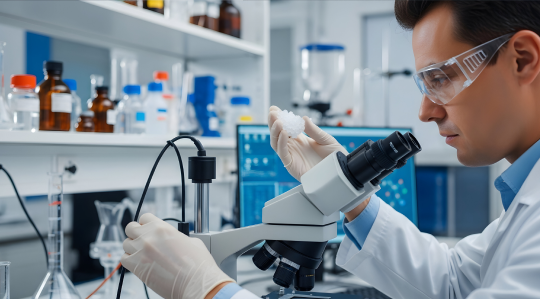
Plastics and polymers are everywhere. Dozens of plastic items surround us, and nearly all of them have had some form of polymer analysis performed in their development. Polymer analysis testing evaluates the chemical composition and properties of plastics, elastomers, and composites. It determines performance, durability, and compliance with certification standards in various industries.
Why Invest in Polymer Analysis?
- Polymers are high-use materials that show up everywhere in daily life. Therefore, it is essential to validate a polymer or plastic’s strength, flexibility, and chemical properties before it goes into production. It is essential to consider, for example, how a polymer reacts with air or how it behaves in food storage.
- Maintaining quality and consistency across large-scale manufacturing is crucial. Batch to batch, supplier to supplier, consistency at repeatable polymer analysis is key to ensure that the product is up to standard.
- Polymer analysis testing also helps with cost efficiency. Choosing the right material prevents failures, recalls, or warranty claims. Given the proliferation of polymers and plastics, one mistake is not isolated; it can quickly be in the hands of thousands of customers.
When Should Polymer Analysis Be Performed?
Like most material testing, polymer analysis has value at each manufacturing process step.
- Selecting the correct polymers in R&D, based on performance criteria for the item you produce.
- At pre-launch, to ensure compliance with safety standards, expected durability, and performance under working conditions.
- In production, to monitor supplier quality and batch consistency.
- Use Failure Analysis if observing cracking, discoloration, or field failures.
Industries That Use Polymer Analysis
Plastics and polymers are everywhere, in nearly every imaginable industry. Some Covalent-specific frequent users of our polymer testing laboratory include:

Semiconductors & Electronics
Used in packaging and insulation of electronic components.

Energy & Batteries
For polymer separators and protective films.

Medical Devices
Used in Medical-grade polymers and plastics, packaging, and everything from stents, IV lines, syringes, glucose monitors, and medical tape.
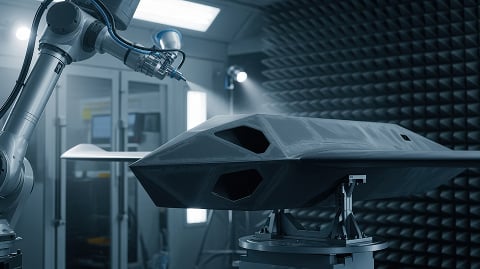
Aerospace & Automotive
In interior and exterior parts, polymer blends for extreme conditions, such as environmental exposure and engines.

Consumer Products & Packaging
For durability, safety, packing, and shipment of consumer goods.

Construction & Infrastructure
Used in sealants, pipes, and polymer composites as well as in construction or manufacturing, like PVC pipes, tools, wire insulation, and more.
Key Differentiators
Advantages
- Flexibility: Various methods can evaluate chemical, mechanical, and thermal properties.
- Sensitivity: When precision matters, polymer composition analysis can identify trace contamination or changes to those properties after use or environmental exposure.
- Highly actionable: Results are easily translated from quantitative measurements to qualitative insights to resolve issues and link to real-world outcomes.
Limitations
- Wide testing demands. Today’s polymer diversity calls for sophisticated instrumentation beyond typical in-house capacity. Covalent offers complete analytical support-from screening to performance-linked characterization.
- Some methods are destructive. Depending on the properties you’re testing and the technique you choose, the tests may damage or consume the sample.
- Sophisticated interpretation. Sensitivity requires specialization, and when performance hinges on minute differences in test results, Covalent’s experts can help interpret the data so you draw the correct conclusions.
What Properties Are Measured in Polymer Analysis?
- Chemical composition and molecular structure.
- Thermal properties like thermal stability and decomposition.
- Mechanical and physical properties such as Impact resistance, toughness, hardness, and fatigue resistance.
- Optical and electrical properties like transparency, absorbance, color, and conductivity.
- Surface and morphological properties, including surface energy, wettability, contact angle, and surface roughness.
- Environmental durability testing: UV/weathering resistance.
Types of Polymer Analysis
We can broadly divide polymer analysis into two groups: polymer property testing and polymer–environment testing.
Polymer property testing examines intrinsic properties like:
- Chemical composition and molecular structure.
- Thermal properties (e.g., stability, transitions).
- Mechanical and physical properties (e.g., impact resistance, hardness).
- Optical and electrical properties.
- Surface and morphological properties.
Polymer–environment testing examines:
- Environmental durability (e.g., UV/weathering resistance).
- Chemical resistance.
How Does Polymer Analysis Work?
- Polymer analysis testing starts with sample preparation. The testing requires the application of heat, stress impact, a solvent to dissolve the sample, or simply spectroscopy to observe it.
- Next, we observe chemical bonds, thermal transitions, mechanical performance, or more, depending on the technique selected and the desired measurement.
- Finally, the results are ready. Covalent helps with results interpretation to translate the results of a controlled test into an extrapolation of real-world results. Our scientists will help you understand what happens under real-world use conditions based on the in-lab results.
How Are Results Tracked and Reported?
At Covalent, we support your project from the first email. We will help you choose the right method, advise on the best way to ship the samples, and discuss the scope of work with you. In some cases, you can request a live session in the lab or remotely. Our reports include:
- High-resolution images, spectra, tables, and figures.
- Quantified measurements with precision calibration, if required.
- Raw data upon request.
- Interpretation aligned to goals.
- Information about used equipment and methods.
Our engineers will gladly follow up on any questions or concerns you may have.
Typical Applications
At Covalent, polymer analysis is grouped around the key properties that drive performance and reliability:
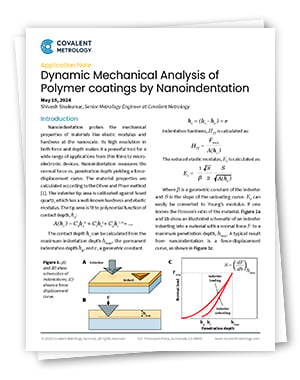
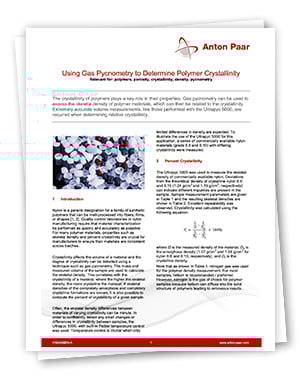
- Chemical Composition and Molecular Structure Analysis: To understand the chemical composition and properties of plastics, elastomers, and composites.
- Thermal Analysis: To evaluate thermal stability and decomposition under heat.
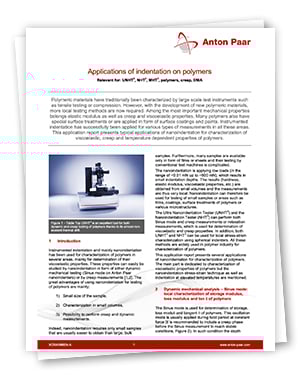
- Mechanical and Physical Testing: To assess impact resistance, toughness, hardness, and fatigue resistance.
- Optical and Electrical Analysis: To check transparency, absorbance, color, and conductivity.
- Surface and Morphological Analysis: To examine surface energy, wettability, contact angle, and surface roughness.
- Environmental Durability Testing: To measure UV and weathering resistance.
Why Choose Covalent for Polymer Analysis Services?
Covalent is the answer for all your polymer analysis needs. Our cutting-edge lab is fully equipped with comprehensive tools, allowing for deep insight and optimal results. Our highly qualified team uses various methods to piece together the answers you need. We also offer live sessions where you can collaborate with our expert team, pinpoint your desired features, and select the right tools.
Frequently Asked Questions
What is the typical turnaround time for a polymer analysis report?
The time necessary to accomplish the report may vary depending on the number of samples and the complexity of the task, but we are doing our best to finish in 5 days.
Contact us to discuss your needs. We are happy to walk you through the process and answer any questions.
Can you analyze different forms of polymer samples, like pellets, films, and finished parts, within a single project?
Yes. At Covalent, we can analyze pellets, films, powders, and finished parts within a single project.
My product is failing. Can you test a 'good' sample against a 'bad' one to find the root cause of the failure?
Absolutely! We can compare samples to identify the cause of failure.
How much material do you typically need for a complete polymer identification or failure analysis?
We need only a few grams of the sample for our methods to perform a polymer analysis. However, we may need larger coupons for mechanical and thermal testing.
Beyond the data report, do you offer consulting to help interpret the results of our polymer analysis?
Yes! Covalent offers consulting services with experts in the field to help interpret polymer analysis results and guide your next steps.
Related Techniques for Polymer & Plastic Analysis
- Atomic Force Microscopy (AFM): Measures surface roughness and morphology.
- Contact Angle Measurement: Measures surface energy and wettability.
- Energy Dispersive X-ray Spectroscopy (EDS): Identifies elemental composition.
- Fourier Transform Infrared Spectroscopy (FTIR): Identifies functional groups and chemical bonds.
- Nuclear Magnetic Resonance (NMR) Spectroscopy: Analyzes molecular structure and bonding.
- Raman Spectroscopy: Gives vibrational information about chemical bonds.
- Thermogravimetric Analysis (TGA): Provides thermal stability and decomposition.
- Ultraviolet-Visible Spectroscopy (UV-Vis): Measures transparency, absorbance, and color.
- X-ray Photoelectron Spectroscopy (XPS): Provides elemental composition and chemical states.
Atomic Force Microscopy (AFM)
Maps nanoscale topography and material properties with a sharp probe. Explore
Fourier Transform Infrared Spectroscopy (FTIR)
Rapid, non-destructive molecular fingerprinting across materials. Explore
Nuclear Magnetic Resonance Spectroscopy (NMR)
Determines molecular structure, composition, and dynamics. Explore
Raman Spectroscopy
Measures inelastic photon scattering for chemical identification. Explore
Thermogravimetric Analysis (TGA)
Measures material mass changes with temperature or time. Explore
X-ray Photoelectron Spectroscopy (XPS)
Measures surface elemental composition and chemical states. Explore



Resources