
What Is Coatings Testing?
We want our products to last a lifetime and be reliable. One way to protect them from corrosion, weather, scratches, humidity, and other environmental damage is to cover the surface with a suitable coating. Coatings testing is built to determine if the coat is resistant and resilient.
These tests examine the physical, chemical, mechanical, and functional properties of coatings, which can vary from thin, transparent films to paints and biocompatible layers. Coatings testing is important for product development, performance validation, and quality control in all industries.
Why Invest in Coatings Testing?
Coatings testing brings notable improvements to real-world performance, offering both technical assurance and strategic value throughout a product’s lifecycle. From the drawing board to the production line, testing ensures that your coatings deliver reliable performance, regardless of the conditions.
- Validating the performance of the coating at relevant conditions will help ensure that the final product meets performance expectations.
- Identifying problems during quality control coatings testing will prevent recalls, warranty claims, and reputational damage.
- Testing is also necessary for coatings to meet standards such as ASTM, ISO, and MIL-spec for compliance and certification.
- Coating tests are used to develop new coatings that will enable a product to increase its lifespan and become more environmentally friendly.
When Should Coatings Testing Be Performed?
- In research and development, material or supplier selection is crucial.
- During or after manufacturing, as a QA Testing in-process or at the end.
- After environmental exposure or field use.
- For coating failure analysis.
- During regulatory compliance and/or certification.
Industries That Use Coatings Testing
Coatings are used in many different industries, starting from the obvious like the automotive industry and finishing by the medical industry for in-body implants. Let’s explore a few examples.
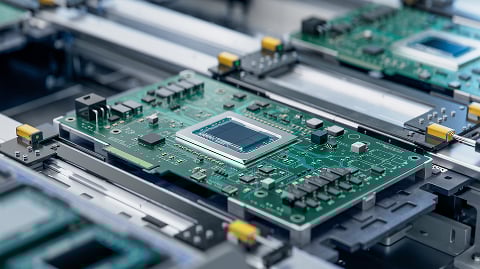
Microelectronic & Consumable Electronic
Utilize a wide variety of coatings; optical coatings must be checked for their properties and homogeneity.
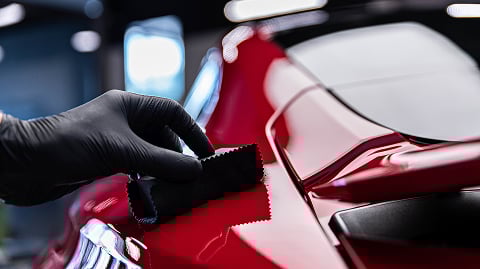
Aesthetic
Coating not only makes products look good, but it also must protect them from scratches and environmental damage.

Automotive
Is a large consumer of coating testing because of the importance to check the coatings for their corrosion and durability properties.
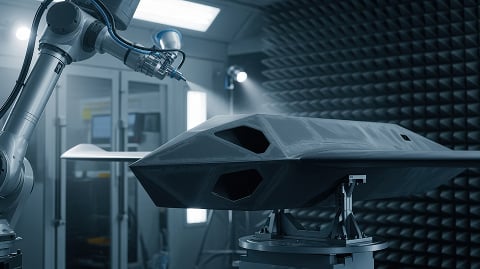
Aerospace & Defense
To check the coatings they use not only for corrosion resistance, but also for resistance at high temperatures.

Marine
In this industry coatings must protect ships and offshore structures from the harsh, corrosive effects of saltwater.

Medical
Cares about the biocompatibility of coatings and the extreme conditions of sterilization.
Key Differentiators
Advantages
The advantages of coating testing are hard to overestimate; it ensures performance and integration, helping to conserve resources and meet regulatory requirements.
- Most coating tests are fast and straightforward, saving time and money by preventing recalls due to coating failures.
- Accelerated weather testing can significantly save time relative to real-life testing.
- Testing is important for understanding how different coatings behave under specific conditions and allows for making informed choices or designs.
- Routine testing helps ensure constant quality control throughout production and helps prevent occasional mistakes.
Limitations
Despite many tests developed for different properties, not everything may be solved by testing; there is always a trade-off between the time and cost of testing and the product performance:
- Laboratory conditions may not always mimic real-life situations. Therefore, the results may not be completely accurate.
- Sometimes the tests are destructive, making it impossible to implement them on the final product.
- For many tests, expensive laboratory equipment and trained personnel are necessary.
Types of Coatings Testing
- Pull-Off Test: Used to determine the adhesion of coatings. It is suited for: metals, composites, and rigid plastics. Among the disadvantages are the destructive nature of the method and dependence on surface preparation.
- Salt Spray Test: Common method used in corrosion testing labs to test corrosion resistance. Suitable for automotive parts and any metal coated with paint, and limited by long testing time.
- Spectroscopic Ellipsometry: A popular method for measuring coating thickness and its optical properties. The technique is good for this or transparent coatings. Limited by requiring smooth, reflective surfaces and complicated interpretation of data, including modeling.
What Properties Are Measured in Coatings Testing?
Many properties are measured during the testing of coatings. Some of these are intrinsic, determining the properties of the coat itself; others choose the coat’s interaction with the substrate or with the environment.
- Abrasion Resistance Testing: A method used to determine how well a coating can withstand wear caused by rubbing, friction, scraping, or other mechanical forces.
- Accelerated Weathering Testing: Is performed under exaggerated conditions, like temperature, chemicals, and UV, to shorten the testing time.
- Adhesion: Tests how well the coating bonds to the substrate. Pull-off, crosscut, or peel tests are all variations of detaching a coating in a controlled way.
- Coating Thickness: Measurement and uniformity testing to ensure that the coating is applied evenly and at the proper thickness using tools such as a magnetic gauge, eddy current devices, or microscopy.
- Corrosion Test: Determines the ability of the coating to protect against corrosion. The testing is performed at relevant chemical and temperature conditions.
How Are Results Tracked and Reported?
At Covalent, we support the project from the first email. We will help you choose the right method, advise on the best way to ship the samples, and discuss the scope of work with you. In some cases, you can request a live session in the lab or remotely. Our reports include:
- High-resolution images, spectra, tables, and figures.
- Quantified measurements with precision calibration, if required.
- Raw data upon request.
- Interpretation aligned to goals.
- Information about used equipment and methods.
Our engineers will be happy to follow up on any questions or concerns you may have.
Typical Applications
We can broadly divide coating testing into two groups: coating property testing and coating vs environment testing.
Coating property testing examines intrinsic properties like:
- Strength of adhesion.
- Film composition and uniformity.
- Film thickness, hardness, and stress.
- Optical properties like refractive index, etc.
Coating vs. environment testing examines:
- Corrosion testing and chemical resistance.
- UV and weather resistance.
- Moisture and water penetration.
Why Choose Covalent for Coatings Testing Services?
Covalent’s coatings and paint testing laboratory is equipped with a comprehensive suite of tools, built to analyze coatings, films, and layers with precision and speed. Our scientists have expertise in surface characterization, mechanical testing, corrosion testing, and thin film analysis. Each test is custom-designed to match the material, objective, and your timeframe. From method development to data discussion, we focus on delivering professional results quickly and clearly.
Frequently Asked Questions
What is the typical TAT for standard coating tests like adhesion or coating thickness measurement?
The standard turnaround time is 5 business days; expedited services are also available.
Can you test coatings on various substrates (e.g., metal, plastic, ceramic) and on parts with complex geometries?
We can test coatings on different substrates. Non-flat geometries should be discussed with our team.
Is abrasion resistance testing destructive to the sample?
Yes, abrasion resistance testing is a destructive process.
When performing coating failure testing, does your analysis also include the substrate and the coating-substrate interface?
The primary focus after coating failure is always on the interface. However, every case should be discussed separately.
Commonly Used Techniques for Coatings Testing
- Ellipsometry: Used to measure the thickness and optical properties of coatings.
- Nanomechanical scratch testing (nano-scratch): Used to measure force response and mechanical properties, typically of thin films and coatings.
- Nanoindentation (nano-indent): A quasi-static mode of nanomechanical analysis used to measure the hardness and reduced elastic modulus of solid samples. It is especially useful for evaluating thin film coatings.
- Scanning Electron Microscopy (SEM): A high-resolution microscope that allows for the identification of morphology, defects, and layer structure.
- X-ray Diffraction (XRD): Indirectly supports property evaluation by revealing crystallinity of the coating.
Scanning Electron Microscopy (SEM)
Images surface topography and composition with electrons. Explore
X-ray Diffraction (XRD)
Non-destructive analysis of crystal phases, lattice, and strain. Explore


Resources