

What Is Material Verification?
In material science, nothing is certain until it’s verified. Every material’s identity, until verified, is just a claim.
By examining microstructure, elemental composition, and key properties, material verification, also referred to as material identification testing, confirms that products and material components are identical to their respective specifications. It is science as a safeguard, giving teams the clarity they need to design, build, and innovate with confidence.
At Covalent, we blend advanced instrumentation with professional interpretation, so R&D, quality assurance teams, and product engineers always have assurance where it matters most.
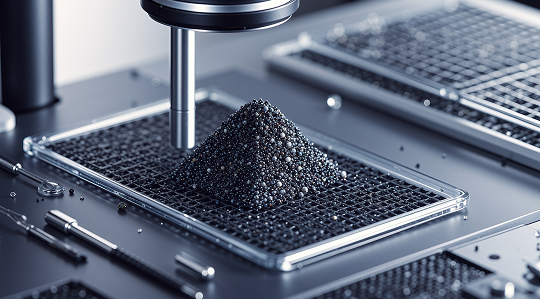
Why Material Verification Is Important
Supplier errors and mix-ups are more common than many realize. Without verification, errors can easily move downstream into processes, products, and even customers’ hands.
Material verification ensures this doesn’t happen. Quality managers and engineers use it to:
- Confirm incoming materials match certifications.
- Prevent costly manufacturing defects and recalls.
- Support root cause investigations into failures.
- Assure regulatory and customer compliance.
- Strengthen traceability and documentation.
- Reduce risk across the supply chain.
Valid, well-documented material verification, backed by accurate data, eliminates surprises. Additionally, many organizations now make it part of broader supply chain quality control, reducing the risk of errors and strengthening accountability across vendors and production.
When Do You Need Material Verification?
Material verification is critical at several stages of a product’s lifecycle:
- Prototyping and Design: Qualifying new suppliers and materials.
- Receiving Shipments: Verifying vendor materials before use.
- During Manufacturing: Ensuring processes use the right alloys or polymers.
- Post-Production QA: Validating that final products meet standards.
- After Failures: Investigating whether material discrepancies played a role.
Whenever there’s a doubt about your material’s identity, confirmation eliminates unwanted hidden risks. This layer of material identification testing helps ensure that no assumptions slip unnoticed into design or production decisions.
Common Types of Material Verification
- Composition Verification Analysis: Confirms whether the material contains the correct elements or chemicals. Techniques like XPS, ICP, FTIR, PiFM, STEM-EDS, and SEM-EDS help to determine the composition.
- Microstructure Verification Analysis: Examines grain size, phases, inclusions, and morphology. EBSD, NBED, PED, Optical microscopy and X-ray techniques are mostly used.
- Mechanical Property Verification Analysis: Measures strength, hardness, toughness, and elasticity to ensure the material meets required performance specifications. Tests such as tensile testing, hardness profiling, and impact assessments provide quantitative confirmation.
- Coating and Surface Treatment Verification Analysis: Evaluates coating thickness, uniformity, adhesion, and composition. Methods like profilometry, ellipsometry, FIB cross-sections, reveal whether it meets design expectations.
- Purity and Contamination Verification Analysis: Identifies and quantifies trace contaminants or unwanted phases that may compromise performance. High-sensitivity tools like ICP-MS, ToF-SIMS, XPS have to be used in this case.
Best Practices for Effective Material Verification
A clear plan and few simple steps make verification smoother and more reliable. To get the best results:
- Share the complete history of your sample.
- Label and document each sample clearly.
- Use gloves and clean containers to avoid contamination during handling and shipment.
- Provide material specifications, standards, or a known reference, if available.
- Consult with our team upfront about your goals so we can design an optimized scope of work together.
Complementary Solutions
Compositional Analysis is a complementary solution to Material Verification:
- Material Verification: Confirms whether a material matches its expected identity or grade, typically giving a yes/no or in/out of spec result.
- Compositional Analysis: Quantifies the exact elemental or chemical makeup, providing detailed concentrations and identifying deviations that material verification alone may not reveal.
Industries That Benefit From Material Verification
Material verification is crucial across all industries, at some point in their product lifecycle. However, it is used differently, and some key examples include:
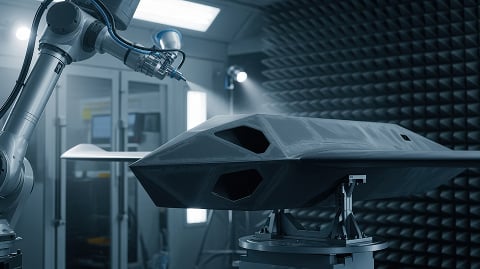
Aerospace & Defense
Verifying alloy grades and the success of heat treatment.

Medical Devices
confirming the composition of implantable metals and polymers.

Automotive
Checking coatings and alloys to prevent corrosion.

Energy
Ensuring stainless steels meet certification to avoid hydrogen embrittlement.
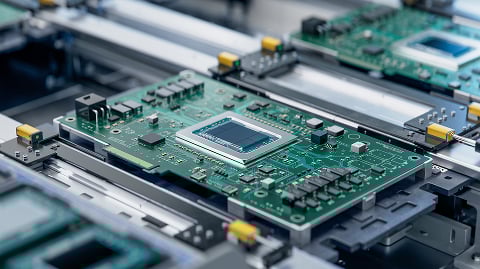
Electronics
Confirming purity in critical materials and processes.
Whether life-saving, safety-critical, or performance-driven, industries often turn to material verification to ensure that their materials perform exactly as promised.
Why Choose Covalent for Material Verification?
Covalent provides material verification with a focus on speed, reliability, and clarity. We combine advanced instrumentation with expert interpretation to deliver results you can act on.
- Full spectrum of high-technology techniques under one roof.
- Expert interpretation from experienced scientists.
- Reports formatted, ready to share with all stakeholders.
- High throughput with flexible turnaround, including rush service when needed.
- Tighter security to protect your intellectual property.
From incoming inspection to forensic failure analysis, we help you choose wisely and act decisively.
Frequently Asked Questions
Can you identify metals, polymers, and ceramics?
Yes. Our lab is fully equipped to analyze a wide range of materials, from common industrial metals to specialized polymers and advanced ceramics, using the right technique for each case.
Does it encompass pass/fail assessment with regard to standards?
Absolutely. If you supply us with the appropriate specifications or references, we can evaluate samples directly against them to confirm compliance.
How quickly can results be available?
Standard turnaround is typically 5–7 business days, but rush options are available for urgent projects.
Can we test materials from multiple suppliers in one order?
Yes. As long as samples are properly labeled and documented, we can test materials from multiple vendors.
Commonly Used Techniques for Material Verification
- Atomic Force Microscopy (AFM): Creates a 3D surface map with astonishing nanometer detail.
- ICP-MS: Ultra-sensitive detection of trace metals and contaminants.
- Optical Emission Spectroscopy (OES): Fast snapshot of bulk elemental composition.
- SEM-EDS: High-resolution imaging with elemental overlays on microstructures.
- X-ray Diffraction (XRD): Identifies crystal phases to confirm internal structure and consistency.
- X-ray Photoelectron Spectroscopy (XPS): Looks at surface chemistry to reveal bonding and oxidation.
Atomic Force Microscopy (AFM)
Maps nanoscale topography and material properties with a sharp probe. Explore
Inductively Coupled Plasma Mass Spectrometry (ICP-MS)
Measures trace elements with high accuracy. Explore
X-ray Diffraction (XRD)
Non-destructive analysis of crystal phases, lattice, and strain. Explore
X-ray Photoelectron Spectroscopy (XPS)
Measures surface elemental composition and chemical states. Explore



Resources