
What Is Tensile Testing?
Tensile testing, also known as mechanical testing or pull testing, is where a specimen is gripped at both ends and pulled at a controlled rate until it either yields or breaks. The machine records the force applied and the extension of the sample, producing a stress-strain curve that quantifies the material’s mechanical response.
Tensile testing is foundational to materials science and engineering, supporting quality control, product validation, research and development, and regulatory compliance across diverse industries.

Comprehensive Mechanical Profiling
Comprehensive Mechanical Profiling
Measures tensile strength, yield point, elongation, and modulus for diverse materials.

High-Precision Instrumentation
High-Precision Instrumentation
Uses Instron 68SC-5 with advanced video extensometer and ±0.5% load accuracy.

Versatile Sample Compatibility
Versatile Sample Compatibility
Supports plastics, films, elastomers, adhesives, foams, composite laminates, and low-strength metals.
Why Use Tensile Testing?
Tensile testing provides a standardized method to evaluate a material’s mechanical integrity, making it a key test for qualifying polymers, metals, composites, adhesives, and films. It measures tensile strength, elongation, and Young’s modulus, characterizes adhesives and composite laminates, assesses environmental or heat-aging effects, and verifies supplier material claims. This testing is widely applied across industries, including aerospace, automotive, semiconductor, electronics, medical devices, packaging, construction, and consumer products.

Assesses Material Integrity
Provides standardized evaluation of mechanical performance for R&D, quality control, and certification.

Supports Design and Simulation
Determines Young’s modulus and stress-strain behavior critical for engineering and product development.

Validates Environmental and Supplier Claims
Evaluates effects of heat, aging, and verifies compliance with material specifications.

Covalent’s Capabilities Offer Tensile Testing
for Quantitative Mechanical Strength
Characterization
Working Principle
A tensile test begins by mounting the sample in two grips of a universal testing machine (UTM), such as an Instron. The machine pulls the sample at a controlled rate until it fractures. During this process, force and displacement are recorded and converted into engineering stress and strain.
Depending on the material and the standard, extensometers or video strain measurement systems may be used to capture precise strain data. The resulting stress-strain curve provides key mechanical properties, including ultimate tensile strength (UTS), yield point, elongation at break, and modulus. For precise strain measurements, we use a non-contact Advanced Video Extensometer (Instron AVE 3).
Test conditions such as speed, grip type, gauge length, and temperature are carefully controlled and standardized (e.g., ASTM D638 for plastics, ASTM E8 for metals).
Equipment Used for Tensile Testing:
Instron 68SC-5 Universal Testing Machine
- High-resolution load cell with ±0.5% accuracy to 1/1000 of capacity.
- Bluehill Universal software with auto-positioning, QuickTest mode, and customizable workflows.
- Interchangeable grips and flexural/compression fixtures.
- Advanced safety features including Specimen Protect and fine-position controls.
- Enables support of ASTM and ISO tensile, compression, and flexural test standards.
- Extensometry: Instron AVE 3 Advanced Video Extensometer (non-contact), compliant with ASTM E83/ISO 9513.

Key Differentiators
- Analytical Output: Stress-strain curves; ultimate tensile strength (UTS), yield strength, modulus of elasticity, elongation at break, energy to fracture, and flexural/compressive load response, tenacity.
- Detection Limits: Load resolution down to 1/1000th of load cell capacity (±0.5% of reading); Covalent carries 50 N, 500 N, and 5 kN load cells.
- Material Compatibility: Rigid and semi-rigid plastics, films, elastomers, adhesives, foams, composites, fibers, and low-strength metals.
- Force Range: Up to 5 kN (1,125 lbf); load cells with built-in overload protection.
- Strain Measurement: AVE 3 Video extensometer.
- Temperature Range: Ambient only (no integrated heating or cooling chamber).
- Grip Options:
- Screw-action grips (general-purpose).
- Pneumatic grips (250 N rated) for delicate films and thin substrates.
- Precision specimen loader for accurate mounting of soft materials and fibers.
- Flexural and Compression Fixtures:
- 150 mm compression platen for foam, rubber, or soft materials.
- 3-point and 4-point bend fixtures for standardized flexural testing.
- Travel Range: 868 mm.
- Test Speed: 0.001 mm/min to 2540 mm/min.
Covalent Capabilities: Standard and custom tensile workflows with integrated report generation; multi-sample throughput; support for ASTM D638, D882, E8, D790, and ISO equivalents. Extensometer compliant with ASTM E83/ISO 9513 and ready to test ASTM/ISO standards.
Strengths
- Our 5 kN Instron 68SC-5 system provides an ideal platform for high-precision tensile, flexural, and compression testing across a broad range of materials. The setup is optimized for R&D, quality control, and failure analysis of films, foams, adhesives, and low-strength engineering polymers or metals. The inclusion of pneumatic grips and a precision specimen loader enables testing of fragile or hard-to-mount specimens, such as ultrathin films or fibers, with consistency and repeatability. Covalent also offers extensive expertise in test method development, standardization, and multi-modal analysis to correlate mechanical performance with compositional or structural data.
Limitations
- Maximum Load: Limited to 5 kN; not appropriate for high-strength metals or structural composites requiring higher force.
- Pneumatic Grips: Rated to 250 N; intended only for lightweight films or soft materials.
- Temperature Control: Testing is conducted at room temperature.
- No Fatigue/Impact Modes: Not designed for high-speed or high-cycle fatigue testing.


Unsure Whether Tensile Testing Is Right for You?
Understanding the mechanical strength of covalent materials is crucial for application in various fields. Learn more about using Tensile testing services today.
Sample Information
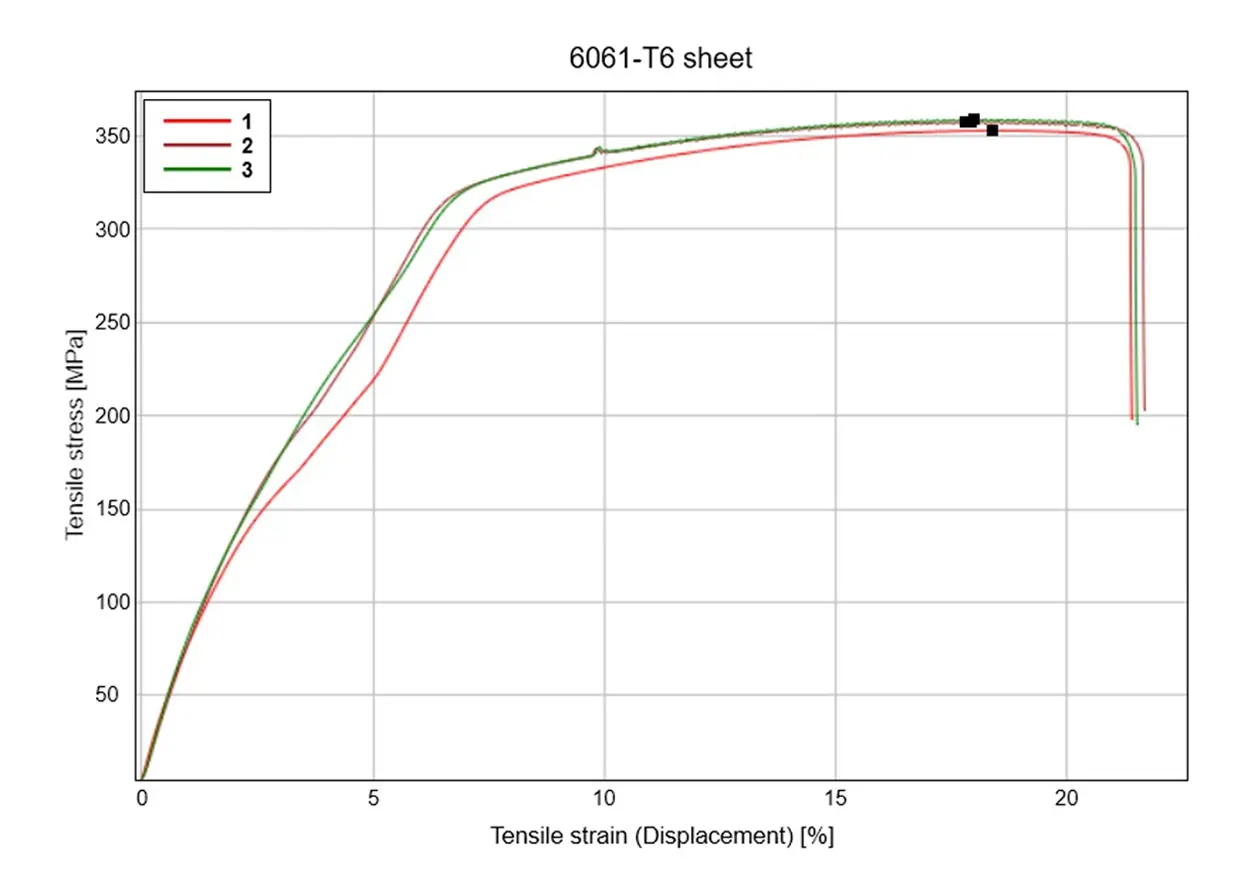
Stress-strain curves of 6061-T6 aluminum.
What we accept:
- Physical Form: Dogbone-shaped specimens (plastics/metals), rectangular strips (films), discs, or other standardized shapes.
- Geometry: Prepared according to relevant standard (e.g., ASTM D638 Type I).
- Sample Size: Tensile specimens are generally 5 mm thick and ≤25 mm wide.
- Special Requirements: Fibers or delicate specimens should be provided in sufficient length (≥100 mm) for alignment and secure mounting.
Use Cases
Covalent has used tensile testing to execute testing standards such as ASTM D638, ASTM D882, ASTM E8.

Automotive
Evaluating heat aging or environmental effects on mechanical performance.

Semiconductor
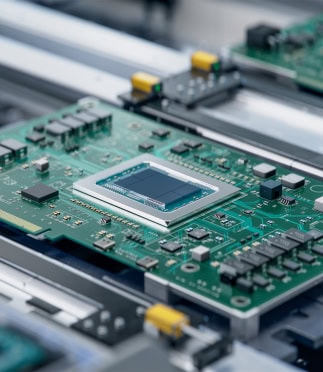
Semiconductor Components: Peel and die-shear tests on printed circuit boards.
Electronics
Characterizing adhesives, joints, and composite laminates.
Medical Devices
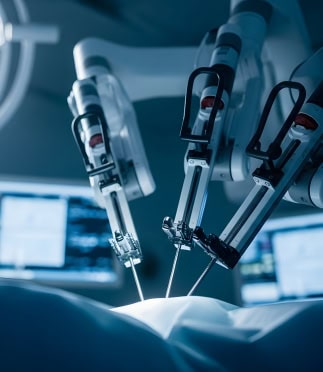
Adhesives: Evaluation of bond strength in epoxy and silicone adhesives used in medical device assemblies.
Packaging
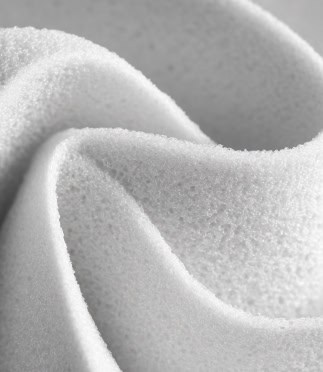
Foams and Elastomers: Compression testing of cushioning materials for wearables and packaging applications.

Material Testing & Material QC
Execute testing standards such as ASTM D638, ASTM D882, ASTM E8.
Consumer Products
Verifying supplier claims for material certifications.
Complementary Techniques
- DMA (Dynamic Mechanical Analysis): For understanding viscoelastic response across a temperature or frequency sweep.
- DSC (Differential Scanning Calorimetry): For identifying thermal transitions (e.g., glass transition temperature, melting point) that may influence tensile behavior.
- FTIR (Fourier Transform Infrared Spectroscopy): For identifying chemical degradation or contamination in fractured specimens.
- Profilometry or Optical Microscopy: To measure necking, strain localization, or crack initiation after test completion.
- SEM (Scanning Electron Microscopy): For analyzing fracture surfaces and failure modes post-testing.
Differential Scanning Calorimetry (DSC)
Quantifies heat flow for material optimization. Explore
Dynamic Mechanical Analysis (DMA)
Characterizes thermal and mechanical properties of soft materials. Explore
Fourier Transform Infrared Spectroscopy (FTIR)
Rapid, non-destructive molecular fingerprinting across materials. Explore
Scanning Electron Microscopy (SEM)
Images surface topography and composition with electrons. Explore
Why Choose Covalent for Your Tensile Testing Needs?
Frequently Asked Questions
Identifying the right test can be complex, but it doesn’t have to be complicated.
Here are some questions we are frequently asked.
What types of samples can Covalent test with tensile methods?
We support plastics, elastomers, thin films, foams, adhesives, composite laminates, and low-strength metals.
Do I need to provide standard-shaped samples like dogbones?
Not necessarily. Covalent can prepare/machine samples in-house.
Can you measure modulus, yield strength, and elongation?
Yes, our stress-strain data allows full characterization including modulus, yield point, UTS, elongation at break, and toughness (area under stress-strain curve).
Can I test samples at elevated or sub-zero temperatures?
Not currently.
How long does tensile testing take?
Typical turnaround is 5 business days after sample receipt. Expedited options are available depending on test complexity and volume.

Resources